

More Sleep = Higher Race Ranking?
A new study tracking sleep patterns during an ultra-cycling race reveals the cognitive costs of sleep deprivation and sheds light on practical strategies that can optimise ultra-cyclists' performance

Samuel Thompson is a professional ultra-cycling coach with Acier.cc and host of the Dot Comms podcast
The importance of sleep is well known, universally accepted, and widely studied in most day-to-day contexts. For multi-day ultra-cycling events, sleep is no less fundamental.
Beyond its impact on physical performance, acute sleep deprivation can have a number of negative, and often dangerous, consequences. These include reduced cognitive performance, increasing the tendency for risky behaviour and reduced sustained attention.
For some time, feats of sleep deprivation had been celebrated and seen as necessary to perform in ultra-cycling. However, the conversation appears to be evolving towards a healthier dialogue around the importance of prioritising adequate quality sleep in order to continue to move fast.
This has been evidenced through the strategies employed by riders competing at the front end of recent high profile races and reinforced by the overwhelmingly positive reaction to Conor McKenzie’s recent opinion piece on sleep as a performance hack.

Nevertheless, the risks associated with sleep deprivation remain and, despite the growing popularity of ultra-cycling, there has been very little research carried out on the role of sleep management and sleep strategies within races. The authors of a recent study carried out during the Race Across France in 2024 recognised this yawning gap, noting that inadequate sleep management may not only impair performance but also endanger athletes’ physical and psychological well-being.
In this review of their study, I delve into what they unearthed and how we can apply the findings to our own approaches to sleep strategy and management in multi-day ultra-cycling events.
What was studied?
The aim of this study, titled ‘The Cognitive Costs of Sleep Deprivation in Ultra-Endurance Cycling: Insights From the Race Across France’ (Hurdiel et al., 2026)1, was to provide practical recommendations for optimising performance, reducing risk and enhancing safety in conditions of extreme fatigue.
The authors set out with the main objective of analysing sleep strategies and their impact on overall performance, postulating that optimised strategies can reduce the effects of sleep deprivation. There were also two secondary objectives, which were to understand the following:
How sleep strategies and durations relate to race time.
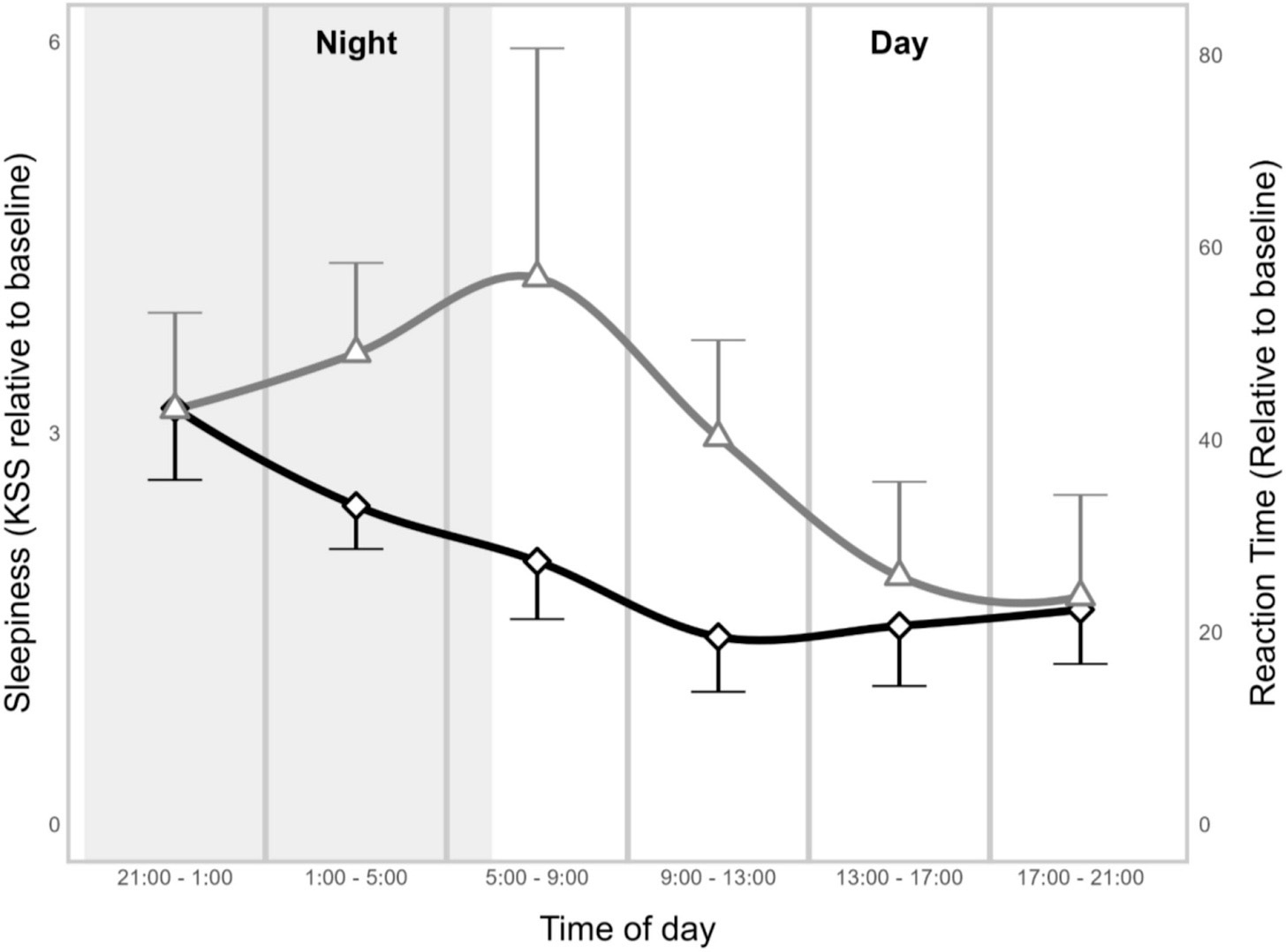
How sleep debt and circadian timing relate to subjective sleepiness and cognitive performance.
They made the hypotheses that race time would be closely correlated with sleep strategies and durations, and that the level of perceived sleepiness and cognitive performance would increase as a function of the level of sleep debt modulated by a circadian effect.
How did they study it?
The Race Across France in 2004 was the testbed for this study. This edition comprised 2,588km with 29,250m elevation gain and a time limit of 10 days.
40 volunteers were recruited (35 men, 5 women) and each of them wore a wrist-based accelerometer for the duration of the race to measure sleep duration.
For the subjective assessments of sleepiness, the participants used a phone-based application where they were prompted to record a self-assessment every four hours throughout the race. The Karolinska Sleepiness Scale (KSS) was used to assess each individual’s level of sleepiness or fatigue on a scale of 1 to 9.
At one hour before the start, one hour after the finish and at kilometres 620, 1,428 & 2,066, the participants were subjected to a cognitive test. This involved a simplified Go/No-Go Reversal task which is essentially a high speed version of ‘Simon Says’, used to measure cognitive flexibility.
Of the 40 cyclists that were recruited, 23 completed the study. 10 didn’t complete the race and the data from 7 participants were discarded due to protocol/equipment failures. Out of 134 finishers, the participants ranked from 3rd to 96th, with finishing times between roughly 6 to 9 days, which meant spending 5 to 8 nights in the race.
What did they find out?
Subjective sleepiness:
A significant increase of sleepiness over time was observed for participants who slept less than 5.29 hours per day on average.
There was also a distinct 24 hour rhythm of sleepiness, which peaked between 21:00 and 01:00 (absolute peak between 23:00 - 00:00) and lowest scores between 09:00 and 13:00.
Cognitive performance:
Participants who accumulated less sleep showed greater declines in discriminability indices and response times.
Those who slept less between tests showed a greater decrease in cognitive performance from baseline than those who slept more between tests.
Time of day influenced how quickly participants could respond, with slower response times observed earlier in the day (05:00 - 09:00) and faster response times observed in the late afternoon (17:00 - 21:00). However, this response time relationship with time of day was not statistically significant.
Total sleep time:
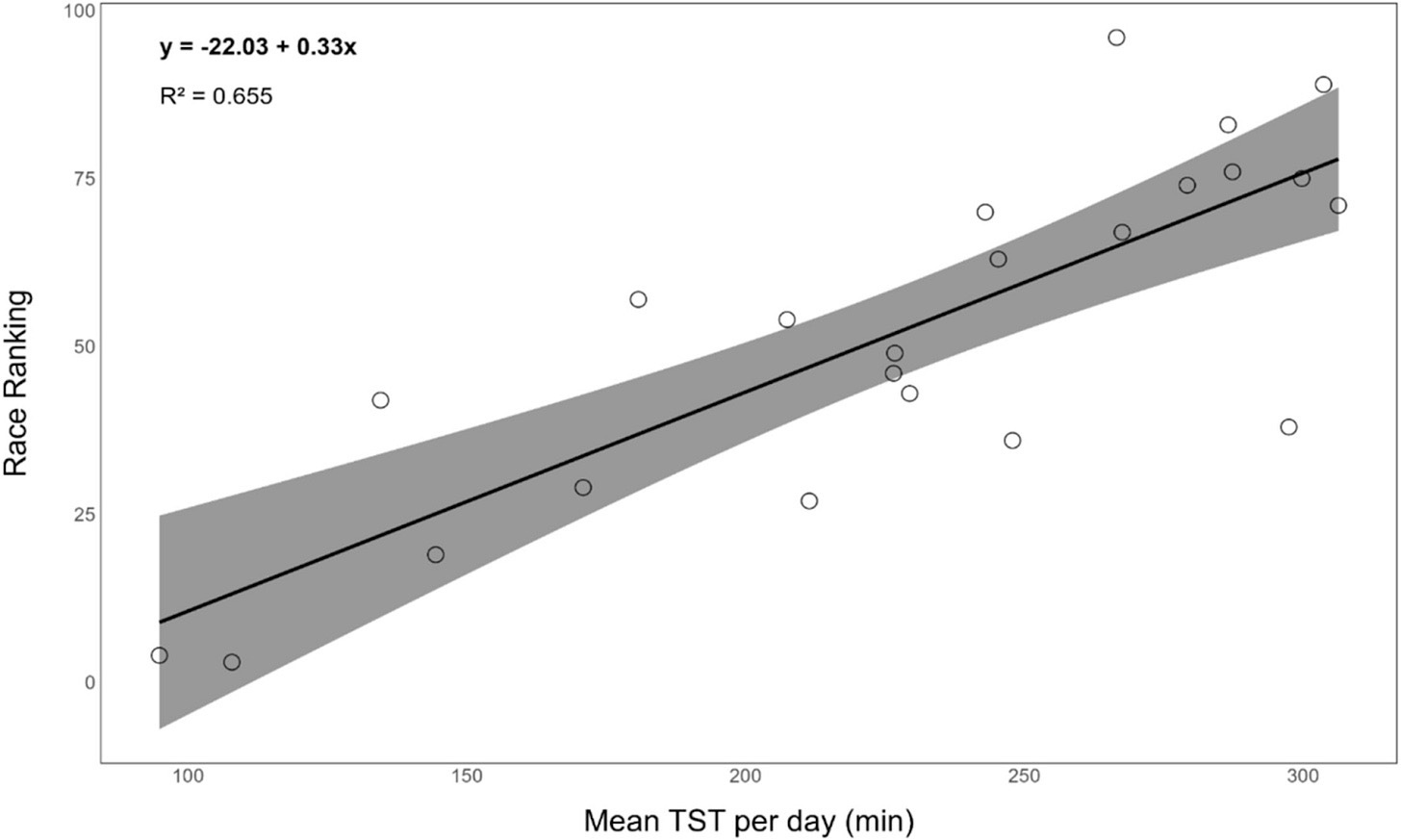
Total sleep time (TST) per 24 hours was assessed for each participant. TST ranged from 95 minutes to 306 minutes per 24 hours between individuals.
It is important to note here that sleep time per 24 hours does not necessarily represent the quantity of sleep that each rider will have taken mid-race. For example, as this race started in the evening, many riders will have ridden straight through the first night and some may have ridden through the last night before the finish without sleeping.
As the fastest riders spent 5 nights during the race, subtracting one or two of these from the total sleep quantity would mean a ‘typical’ mid-race significantly higher than the per 24 hour figure quoted.
TST in race was positively and significantly related to time in race. Participants’ race ranking was positively and significantly related to mean TST per 24 hour.
A positive relationship was identified between GPS null velocity (time not moving) and TST, illustrating that those who stopped for longer overall, also slept for longer each day. TST represented on average 39.2% of GPS null velocity.
Conversely, there was no correlation between the ratio of TST over GPS null velocity with race ranking. This means that those who spent a greater proportion of their stopped time sleeping didn’t necessarily finish in a faster overall time.
Sleep Timing:
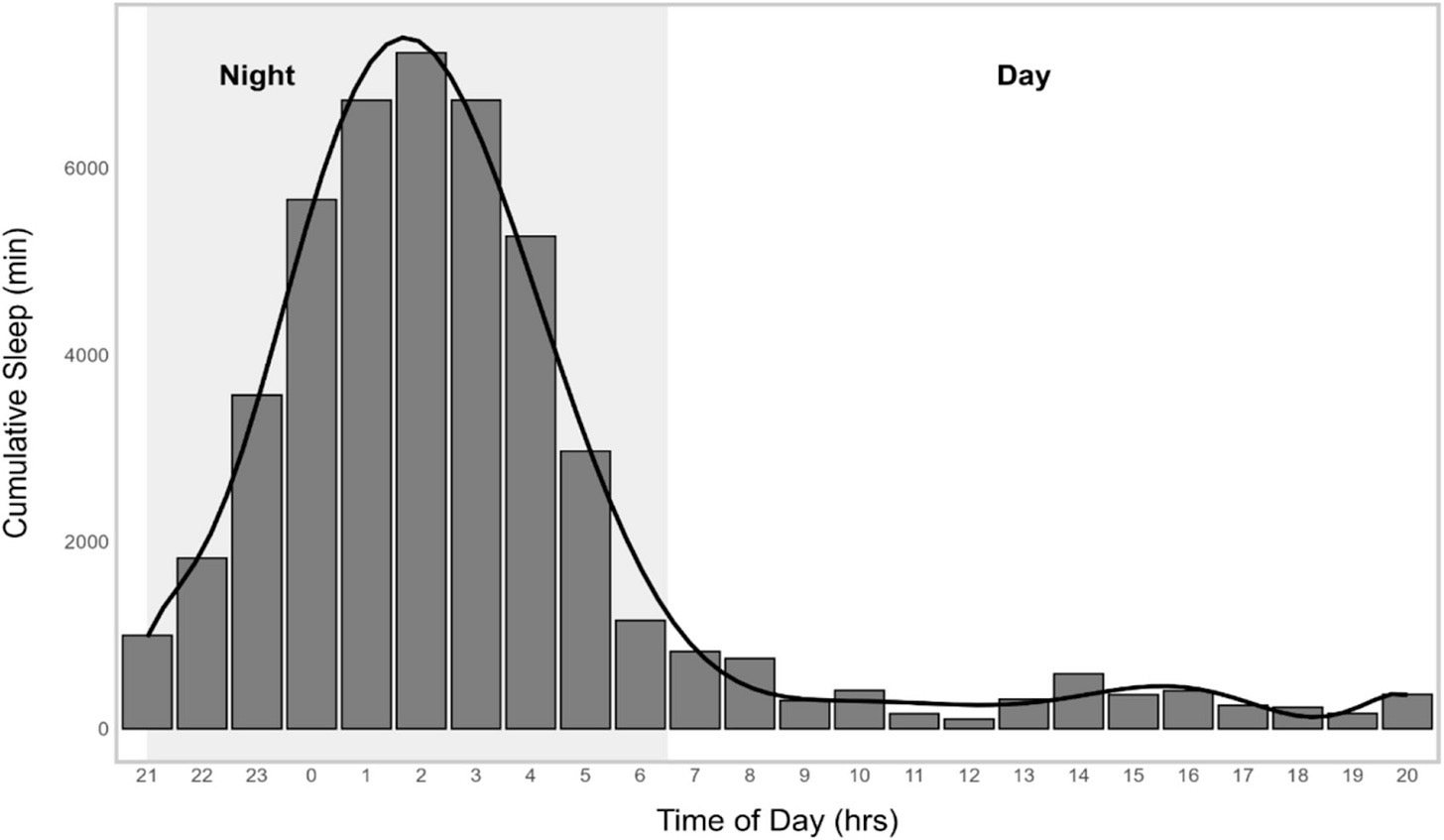
Most sleep took place between the hours of 00:00 and 04:00 and the researchers noted a distinct 24 hour circadian rhythm in cumulative sleep.
What are the key takeaways?
Sleep at least 5.29 hours per night to avoid the dozies:
This is of course a very simplistic interpretation, but the authors do suggest that this amount of sleep may represent a threshold of the minimum sleep requirement for maintaining alertness and mitigating sleep debt during prolonged events. It is nevertheless a reminder that the cumulative effects of sleep deprivation will build over time if adequate rest is not taken, with consequences on performance and cognitive function.
Stick to the (circadian) rhythm:
The observation that measures of sleepiness and cognitive performance both followed clear patterns in relation to time of day gives a good indication that the timing of sleep can have important implications for quality of sleep and performance, both when awake and whilst moving. There will still be individual variation in the precise timing of sleep, although for most people this appears to be optimised between 00:00 and 04:00.
I would view this study’s findings most strongly as evidence of the importance of maintaining consistency in sleep/wake patterns for prolonged events. Having regular sleeping hours in day-to-day life is often recommended, and the same should apply in these situations.
The circadian rhythm relies on physiological fluctuations such as body temperature and hormone secretion to regulate the phases that favour wakefulness or sleep. When we are subjected to bouts of sustained exercise these mechanisms can be disrupted. This exacerbates the effects of sleep deprivation, compromising alertness, perceived exertion and decision making.
Constant changes to sleep timing therefore risks compromising sleep quality through trying to sleep at times of day when sleepiness is less pronounced. Performance can also be negatively affected if one is riding at times where sleepiness is at its highest and cognitive performance disrupted.
The recommendation this study offers is therefore to leverage circadian principles in an attempt to schedule sleep and rest breaks more effectively.
Sleep quality is just as important as quantity:
The observation that there was no correlation between the ratio of TST over GPS null velocity with race ranking is an interesting one. The authors suggest that this supports the importance of the quality and timing of sleep in addition to the time spent stationary.
This finding implies that each athlete spends a proportionally similar amount of non-moving time sleeping and that riders with slower finishing times do not necessarily spend more time ‘faffing’ on a pro-rata basis.
If you snooze, you lose. Or do you…?
This is a nuanced one, where the headline pattern observed requires further consideration.
Firstly, the way the results are presented and discussed in the article can appear contradictory, or simply confusing. The authors state:
“Participants with higher mean TST per 24 hours finished with higher rankings, indicating that strategic sleep management is critical for sustained performance in ultracycling”.
The use of the word ‘higher’ when describing rankings is potentially misleading. In general parlance, one would associate a ‘higher’ ranking with a better result (i.e. higher on the leaderboard). Here, there is a more literal use of the term. A higher ranking is referring to a higher finishing number and thus a slower overall time. 99 is ‘higher’ than 1 in this sense.
So a simple, face value interpretation could be thus: sleep less, finish faster.
The Discussion addresses this observation tangentially, but does little to explain the reasoning behind it:
“The results of this study highlight the importance of sleep as a performance-determining factor in ultracycling. Indeed, participants with higher mean sleep durations achieved higher rankings, demonstrating that strategic sleep planning is critical for sustained performance. Athletes should prioritise getting sufficient TST while ideally timing the rest periods to align with their circadian rhythm.”
In practice, it is clear that optimising moving time is crucial for success in ultra-cycling. As one is (hopefully) not moving whilst sleeping, each moment spent doing so involves not making forward progress.
However, what this study and numerous precedents demonstrate is that taking sleep deprivation too far has implications for performance and, more importantly, safety. The talk of ‘strategic sleep planning’ and ‘sufficient TST’ hints at this crucial balance but less in terms of practical details.
I therefore reached out to the head author of the study, Rémy Hurdiel, to ask whether we should be looking beyond the raw numbers here to understand what is really going on. He made some important considerations:
“Athletes with better rankings (i.e. faster finishers) typically spend fewer nights in the race overall. As a result, they can tolerate a higher sleep pressure because they only need to sustain this deprivation for a shorter duration (a few days), whereas athletes with higher numerical rankings must cope with accumulated sleep loss over much longer periods…
However, for the top-ranked athletes to maintain such low sleep ratios, they must be extremely precise and strategic in their nap and sleep decisions. Without very well-timed and efficient sleep management, the cognitive risks become substantial and they may quickly lose control of vigilance and decision-making…
It is also worth noting that these very low sleep amounts likely reflect the profile of exceptional individuals: they are probably physiologically robust, possess very high physical capacities, and are often relatively young, characteristics that may increase tolerance to acute sleep restriction.
So rather than indicating that “less sleep is better,” our interpretation is that faster athletes compress sleep into shorter but highly strategic opportunities, while slower athletes must adopt more sustainable sleep patterns over a longer race duration.”
This is yet another illustration of the one-size-does-not-fit-all approach that needs to be taken to ultra-cycling. The amount of overall time that one is racing is naturally going to affect their personal sustainable level of acute sleep deprivation. This also implies that specific and individual considerations need to be taken to different events with varying durations.
The point on ‘exceptional individuals’ is also an interesting one. We don’t all respond to sleep deprivation in the same way (as this article explains) and each athlete’s approach to their sleep strategy should account for this, as well as their experience, tolerances and aspirations for the race.
Additionally, when reviewing the data, if one were to remove the two athletes at the far bottom left corner of the TST vs Race Ranking chart, the correlation would be far weaker. Even the athlete finishing 4th slept more than the 3rd finisher.
We also don’t know whether all of the participants were necessarily attempting to optimise their sleep duration. The correlation here could thus be linked more to intention and approach.
If all were indeed trying to optimise sleep for performance, the link may still exist between total race time and sleep duration per night, but a more detailed comparison of those with similar finishing times may reveal more about the importance of sleep management on race outcome.
Furthermore, to reveal more about the requirement for greater sleep time per day, it would have been interesting to see the relationship between TST per 24 hours and overall race time, rather than just race ranking.
Whilst we would expect the correlation to still be there, the nature of the trend may be nuanced from looking at rankings alone and potentially tell us more about how much more sleep is required as overall race time extends. Perhaps there would be an exponential relationship, with greater quantities of sleep required beyond a certain point that could indicate a threshold for tolerance to acute sleep restriction.
What limitations are there?
There are, naturally, several limitations to highlight. In addition to those already mentioned, this was a relatively small sample size, the results only concern a single event of 2,588km, and the attrition rate was high.
Some of the potential data was lost from accelerometer malfunction and it was noted that EEG-based sleep tracking could in future provide more detailed and accurate data on sleep quantity and quality. The authors also propose that tracking power data could give further insight into physical performance and its relationship with the sleep observations..
What is also missing here is what happened to those who did not complete the experiment, or those who did not complete the race. In this cohort there could potentially be individuals whose reason for not finishing was that they did not correctly manage their sleep.
Were the 3rd and 4th finishers in this situation just the lucky ones who took a gamble with sleep duration and found it paid off on this occasion? Again, remove them from the picture and the distribution is more heterogeneous. For example, the person in this experiment who slept the third least per night was only the 9th fastest finisher from this sample. This person didn’t snooze and appeared to lose as a result.
What are the conclusions?
The major point that I believe requires further investigation and analysis is the relationship between total sleep time per 24 hours and race performance. Drawing the conclusion from this study that less sleep = a faster finish would be quite reductionist and does not give the full picture.
I would like to see more investigations about how sleep quantity, sleep quality and patterns of sleep differentiate those with similar finishing times, and how mis-management of sleep affects performance over the course of a race.
Indeed, an even more recent systematic review on the role of sleep on physical and cognitive performance of ultra-endurance athletes by Guilherme et al. (2026)2 views this relationship between TST and performance as non-linear and influenced by race context and individual strategies.
I would also welcome more insight into the strategies that the fastest finishers used in order to implement their apparent strategic sleep planning. It is suggested that athletes need to prioritise getting sufficient TST while ideally timing the rest periods to align with their circadian rhythm, but these results do not go as far to illustrate how this was put into practice.
The authors cite the concept of ‘Wakefulness Make Good’ (WMG) which describes the strategic optimisation of wakeful periods in contexts of sleep deprivation. This comes down to making good of sub-optimal sleep duration in order to optimise overall finishing time).
The approach focuses on using short naps and efficient sleep management to maintain physical and cognitive performance under prolonged stress (Hurdiel et al., 2012)3. An illustration of how sleep per 24 hours was accumulated by participants of varying rankings could shed more light on this (i.e. whether this is in one solid block, or a number of shorter periods).
Nevertheless, this study is a very positive step towards acquiring real-life data on the impact that sleep has on multi-day events, in terms of both performance and wider health consequences. I am hugely supportive of these studies being carried out in practice and on a reasonable scale beyond the single-subject case studies that have dominated the research to this date. Collaboration between researchers and practitioners, such as coaches and event organisers, is vital to ensure the outcomes provide practical applications for participants.
For this study, there are some important takeaways for anyone participating in, or considering participating in, similar events. Those pertaining to aligning sleep strategy to circadian rhythms stand out to me. Optimising sleep is indeed crucial for race outcomes but, as the authors rightly highlight, inadequate sleep management may carry significant health and safety risks.
The longer term consequences of sleep deprivation, particularly on mental health also require consideration and further research. Smith et al. (2023)4, in their narrative review of sleep deprivation in ultra-endurance cycling, highlight that there is limited recognition about inadequate sleep and intermittent or acutely short periods of sleep could affect an ultra-endurance rider’s mental health.
Finally, as a coach working with athletes for whom these events are primarily for enjoyment and personal fulfilment as a hobby I fully endorse the authors position that education on sleep should go beyond performance optimisation and emphasise risk reduction and athlete wellbeing:
“Such measures would help protect both the individual rider and those around them, fostering safer and more sustainable participation in ultra endurance competitions.”
In Episode 013 of Dot Comms, the lead author of this study, Rémy Hurdiel, is a guest on the Roundtable discussion on whether sleep periods should be mandatory in ultra-cycling events. The episode is available on all major podcast platforms including Spotify and Apple Podcasts.
🚨 Before you go! Help support our work and…
Click below to Like ♡ and Restack ⮂, and help us grow.
Hit the ‘Subscribe’ button if you haven’t already.
Leave a comment 🗨️ with your thoughts, we love reading them all.
Upgrade to a paid subscription to help make this all possible.
Hurdiel, R., C. Kurinec, T. Pezé, C. Bonduelle, and V. Bourlois. 2026. “ The Cognitive Costs of Sleep Deprivation in Ultra-Endurance Cycling: Insights From the Race Across France.” Journal of Sleep Research e70295. https://doi.org/10.1111/jsr.70295.
Guilherme, L.Q.; Rodrigues, B.O.; Rosa, C.d.O.B.; Leite, L.B.; Scheer, V.; Forte, P.; Hermsdorff, H.H.M.; Kravchychyn, A.C.P.; de Sá Souza, H. The Role of Sleep on Physical and Cognitive Performance of Ultra-Endurance Athletes: A Systematic Review. J. Clin. Med. 2026, 15, 1398. https://doi.org/10.3390/jcm15041398
Hurdiel, R., C. Monaca, B. Mauvieux, P. Mccauley, H. Pa Van Dongen, and D. Theunynck. 2012. “Field Study of Sleep and Functional Impairments in Solo Sailing Races.” Sleep Biology Rhythms 10, no. 4: 270–277. https://doi.org/10.1111/j.1479-8425.2012.00570.x.
Hurdiel, R., C. Kurinec, T. Pezé, C. Bonduelle, and V. Bourlois. 2026. “ The Cognitive Costs of Sleep Deprivation in Ultra-Endurance Cycling: Insights From the Race Across France.” Journal of Sleep Research e70295. https://doi.org/10.1111/jsr.70295.
 | A guest post by
|