

Opinion: When an Adventure Becomes a Race, the Rules Need to Catch Up
Reverb ultra-racer Adam Jordan guest writes a piece on the fall-out from Traka 560 and offers a way forward

Adam Jordan rides for Reverb and has won races like Basajaun and GranGaunche Gravel. He’s a Slovenian ex-pro road racer and participated in this year’s Traka 560.
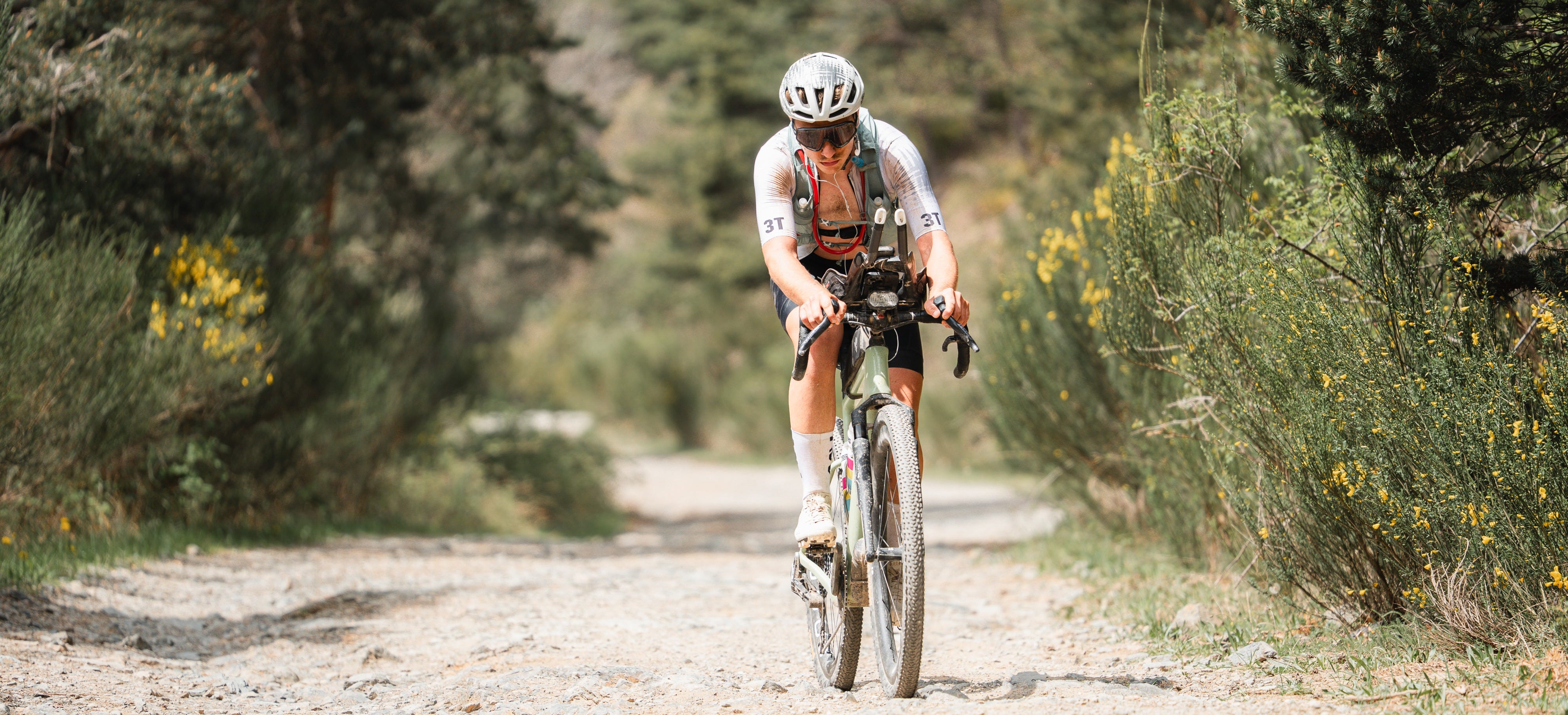
Gravel and ultra racing have grown because they offer something different. They are not road racing with gravel tyres or traditional sport dressed up in a looser format. They are built on trust, self-reliance, community, and the idea that a rider can take on a difficult route with very little between them and the outcome.
That is what makes this part of cycling special.
But the sport is changing quickly. Events that were once small, informal, and mostly community-driven are now attracting professional riders, media attention, sponsors, film crews, live coverage, and global audiences. Results are no longer just personal achievements. They can influence contracts, partnerships, selection for future events, and the direction of a rider’s career.
The Traka 560 brought many of these questions into focus. Not because one event or one organiser should carry the whole weight of the discussion, but because it showed how quickly the sport has grown and how much of the structure around it is still catching up. The Traka is now one of the biggest gravel events in Europe, with published results, tracking, media coverage, and winners celebrated across the cycling world.
The difficult question is simple: at what point does an “adventure” become a race?
That question was raised many times in the past week, and it feels like one of the most important conversations in gravel right now. If an event has results, winners, podiums, sponsor value, media coverage, and riders treating it as competition, then it becomes hard to keep calling it only an adventure. The words matter, because the responsibilities change with them.
This does not mean every event needs to become UCI-regulated. In fact, that is probably not what most riders want. The freedom of gravel and ultra racing should be protected. The answer is not necessarily a governing body controlling everything from above.
What the sport may need instead is an independent organisation that helps events apply the rules they have already created.
More like a neutral support structure: a place where organisers can ask for guidance, where riders can submit complaints through a clear process, where evidence can be reviewed, where decisions can be justified, and where standards can slowly become more consistent between events.
At the moment, too much depends on each organiser making decisions alone, often under pressure, in public. That is not easy. Most organisers are doing a huge amount of work just to make these events possible. They manage permits, routes, safety, logistics, volunteers, tracking, communication, sponsors, and riders. It is important to recognise that before criticising anything.
But as the sport grows, it becomes unfair to expect individual organisers to solve every grey area by themselves.
Some events already show that clearer systems are possible without destroying the spirit of self-supported racing. Lost Dot, through events such as the Transcontinental Race, has built a clear distinction with setting the same rules for everyone which are always taken seriously.
The Mountain Races, organised by Nelson Trees, also provide a strong example. They published their official AMR results just after Traka, which is 3 months of carefully reviewing everything. That kind of structure does not make the race less adventurous. It makes the competitive side more trustworthy.
Other events, such as GranGuanche, are interesting for the opposite reason. They lean much more clearly into the idea of a collective self-supported adventure rather than a race, with no prizes, medals, or traditional race framing. That clarity is also valuable. It shows that an event does not always need to become more formal, but it should be honest about what it is.
The problem comes when an event lives in the middle: described as an adventure when responsibility is questioned, but treated as a race when results are published, winners are promoted, and sponsors use the outcome.
That grey zone is where trust starts to break down.
There are several areas where the sport could improve without becoming over-regulated.
First, definitions need to be clearer. What exactly is a race? What is an adventure? What is self-supported? What is outside assistance? What counts as drafting? What distance must be kept? What is allowed from media crews? Can private photographers, team staff, or brand vehicles be present on route? If they can, under what conditions?
Second, complaints need a process. Riders should know how to report a possible rule breach, what evidence is required, who reviews it, what the timeline is, and how a decision will be communicated. Organisers should not be left to deal with sensitive cases informally or inconsistently.
Third, sanctions need to be predictable. Not every issue deserves disqualification. Some may require a time penalty, removal from GC, a warning, or no action at all. But riders should know in advance what kind of consequences are possible.
Fourth, the sport needs a more serious conversation about clean competition. Gravel and ultra racing are now attractive to professional athletes and sponsored riders, but many events still have no anti-doping framework at all. If the sport wants results to matter, it also has to ask how clean sport is protected. That does not mean every event can afford full testing immediately, but it does mean the conversation can no longer be ignored.
Fifth, safety has to be considered as part of fairness. When an event is treated as a race, riders will take risks to gain time. That affects not only riders, but also local people using the same roads, gravel paths, and public spaces. Start formats, route design, signage, timing, and communication are not just logistics. They shape how safely the event can be raced.
Enjoying this post?
Subscribe to get future long-form interviews, race breakdowns, thoughtful pieces, and deep-dives into the data straight to your inbox:
We try to publish most of our work for everyone. If you’d like to help us keep doing that, upgrading to paid is what makes it sustainable – and it unlocks premium posts and the archive:
None of this is about removing trust from the sport. It is about protecting it.
Self-supported racing will always rely on personal responsibility. As Bikepacking.com put it in its discussion of self-supported principles, riders enter into an agreement with themselves, the other racers, and the organiser to follow both the written rules and the understood spirit of the format. The basic principles are simple: no outside aid, stay on route, and do not act against the spirit of the race.
But the more valuable results become, the more support that trust needs.
The good thing is that this sport has a strong community. Riders, organisers, photographers, dotwatchers, journalists, brands, and fans all care deeply about what gravel and ultra racing becomes next. There is enough knowledge already inside the sport to build something better. In fact, it feels almost inevitable that some form of independent support organisation will come to life soon.
The goal should not be to make ultra less free.
The goal should be to make it fairer, safer, and more transparent, while keeping the spirit that made people fall in love with it in the first place.
Because if there are winners, podiums, sponsors, media attention, and careers on the line, then the sport needs standards.
And if those standards are clear, consistent, and applied to everyone equally, the riders will trust the results more.
The organisers will be better protected.
And the sport will be stronger for it.
🚨 Before you go! Help support our work and…
Click below to Like ♡ and Restack ⮂, and help us grow.
Hit the ‘Subscribe’ button if you haven’t already.
Leave a comment 🗨️ with your thoughts, we love reading them all.
Upgrade to a paid subscription to help make this all possible.
 |
|
Some really interesting food for thought here, Adam. Thank you so much for sharing. I wonder if, in the next few years, we'll see more weight given to the organisation when choosing races, rather than to other factors?
Right on point.