

Opinion: Exploring the Grey Areas of ‘Self-Supported’
When is the line crossed from self-supported to supported racing?

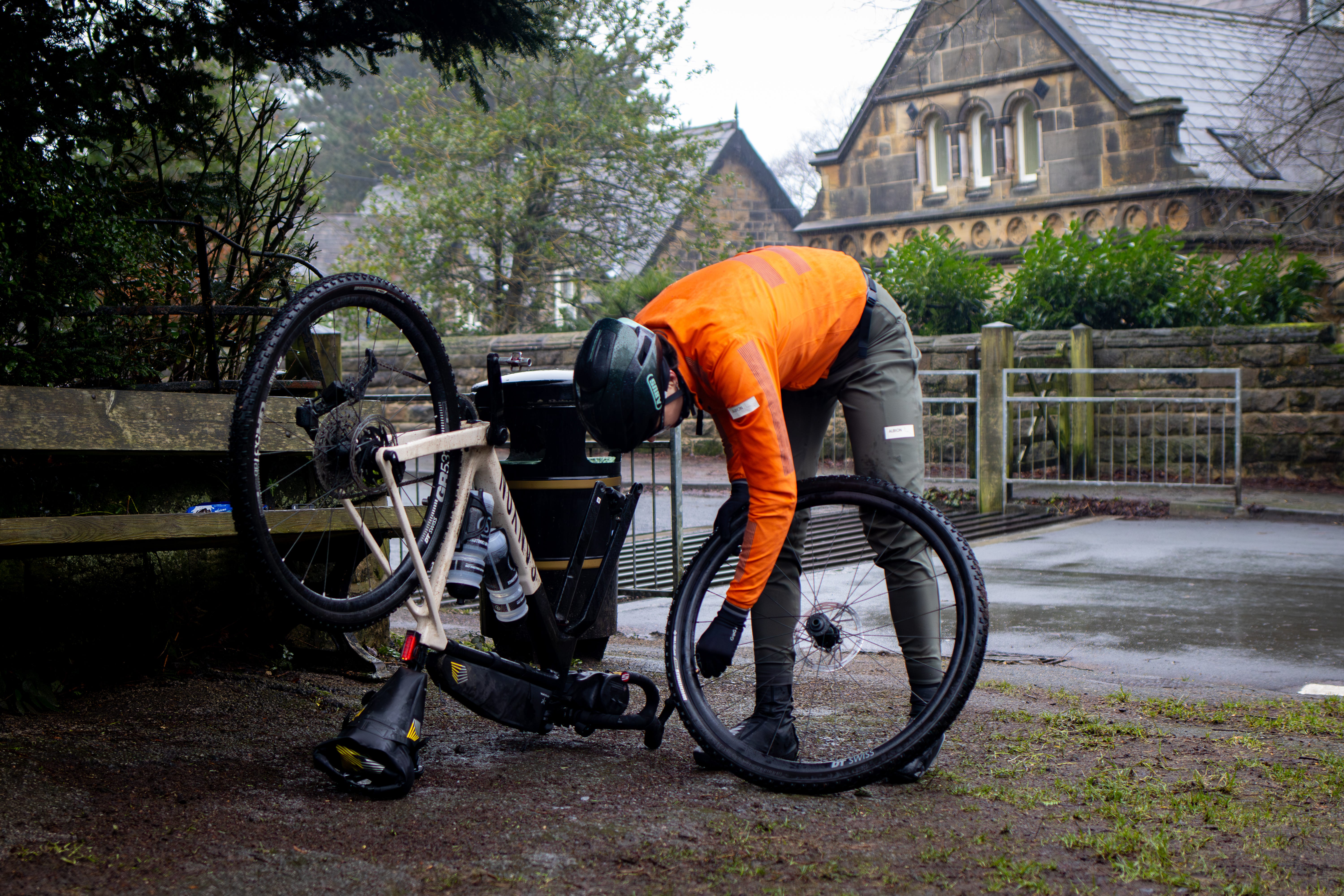
Picture this: you’re in the middle of an ultra distance self-supported race or FKT attempt, alone at night halfway up a mountain pass fixing a mechanical. The cold wind is howling, the sky ominous as it starts to rain. Your numb fingers can barely feel the tyre to wrestle it off the rim. It’s 11pm, you’ve been on the move since 4am. You’re out of food and had planned to resupply in the next town on the other side of the pass before finding somewhere warm and dry to bivvy for the night. The outlook is grim, with desperation you consider your options including a 20km hike to the safety of civilisation.
A 4x4 trundles up the rough double track and stops beside you, the driver is equally surprised and concerned for your wellbeing. The rain is really coming down now. You feel thankful but impatient at them stopping, the interaction is wasting valuable time! They offer to give you a lift, as they happen to live in the town 20km away and have a spare room you can stay in. They seem kind and the prospect is appealing. You have two choices: accept the lift and scratch from the race, or choose to stay in the current predicament and accept it as a test of resilience. What would you do?
This may be an extreme example, however it is one that sets the scene of a typical scenario during a self supported race, and the challenges and temptations that can arise. The core ideal of self-supported racing is a test of independence, resilience and equal opportunity.
There could be a third option to consider: accept the lift, use the opportunity to sleep and refuel, fix the mechanical and return to the exact spot to pick up where you left off. If health and safety were genuinely at risk, this seems like a sensible option in order to mitigate risk and keep moving. However the bottom line is that external help has been accepted as something not available to all participants, therefore a time penalty or disqualification could be the consequences depending on the specific rules of the race. This is an example of where the grey area of self supported starts to seep in, whether the ‘rules’ have been broken or not is somewhat subjective.
The central question we’re exploring here is whether ‘self-supported’ is a clear principle? Is it a binary thing, and if so where does the principle start and end? Are the boundaries rigid, or is it considered a fragile myth we collectively agree to believe in, in support of making it to the finish line in one piece? With no governing body for the sport we have seen a variety of approaches from different race organisers, some more relaxed than others in terms of what is allowed, some even turning a blind eye.
Let’s go back to basics and define what ‘self-supported’ is generally accepted to be by the community. I imagine it as three pillars, based on principles which emerged from early bike packing races such as The Transcontinental Race and Tour Divide, Mike Hall being a key influence in the field.
Self Sufficiency
Equal Opportunity
Don’t be a dick
The consensus is that riders must ride in the spirit of self-sufficiency and equal opportunity, which means carrying everything needed and visiting establishments that are commercially available to everyone. No physical or informational support is allowed, this includes private re-supplies, mechanical support, gear stashes, navigational assistance or real time coaching advice. I see the third pillar ‘don’t be a dick’ as an ethical compass to catch those grey areas; don’t exploit grey areas in a way that undermines the spirit of fairness, self-reliance or respect for others. If a certain action is providing an unfair advantage in some way, the grey area has been transcended.
My argument is that self-supported isn’t binary, it’s a continuum with grey areas. Choosing to participate in a self supported bike packing race means entering into an unspoken agreement with yourself, your fellow racers and the organiser to adhere to the principles of self supported racing and the event’s stated rules. What seems simple in theory is also a test for our moral compass when tired and hungry. We are all human, and even the most well-intentioned and experienced racers can tread the grey area unwittingly. This is where pillar three ‘don’t be a dick’ really comes into play.
Let's explore some scenarios across the continuum, from purity to blurred lines to escalating provocations.
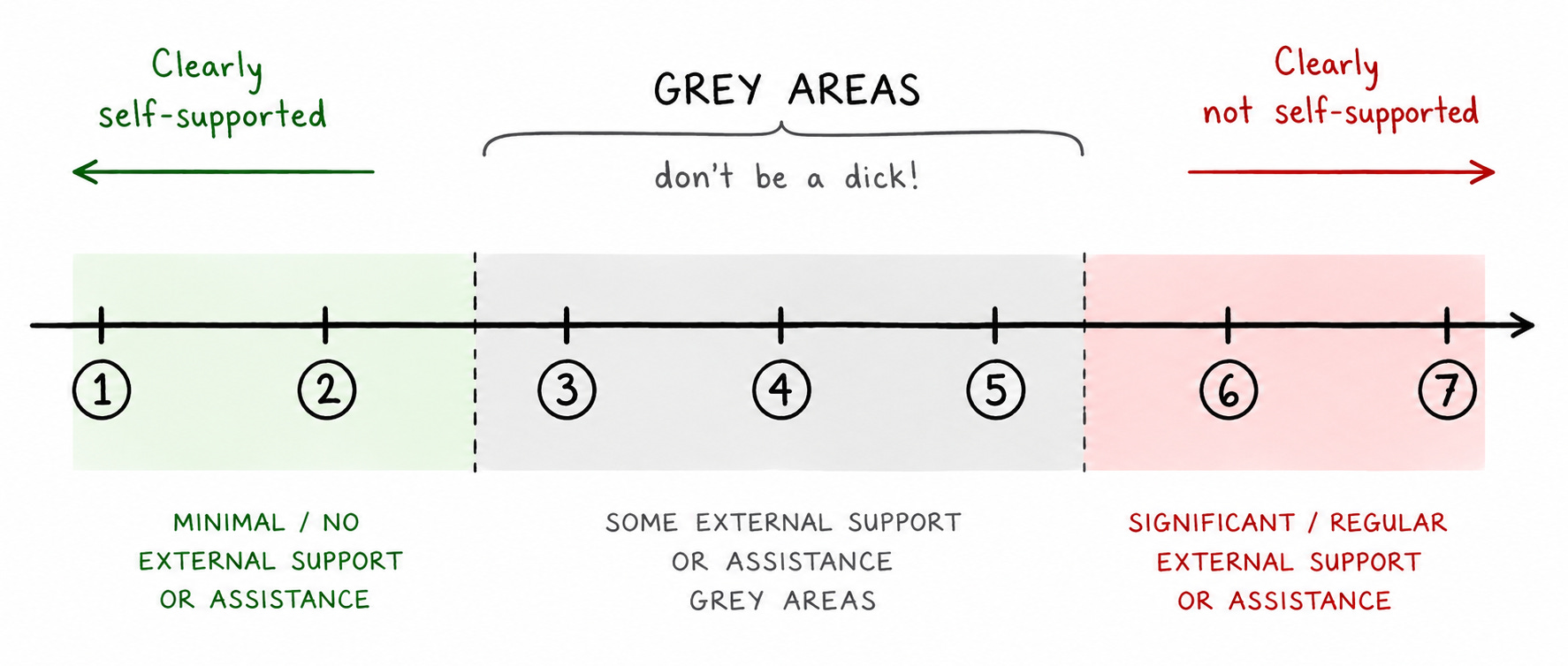
The Pure End: Unambiguous Self-Sufficiency
Buying food from a shop open to everyone
Fixing your own mechanicals with what you carry
Navigating solely using your own devices and preloaded route
No debate here. This is the ideal those unspoken rules are written around.
Still Clean, But Slightly Softer Edges
Asking a passer-by for directions when lost
Using publicly available information (weather forecasts, route files, forums)
Sharing a table with another rider but riding independently
These actions rely on the outside world—but crucially, they’re equally accessible to all.
The Light Grey Zone: Incidental Human Interaction
A café owner gives you an extra sandwich “on the house”
A stranger offers to pump your tyre at a public bike stand
Another rider lends you a tool, unplanned, in the moment
There’s nothing pre-arranged and nothing exclusive. But already, outcomes begin to diverge based on chance encounters. You could also call this luck of the game. The grey area is toed however allowed specifically because such encounters are unplanned and unpredictable.
The Mid Grey Zone: Connection without Arrangement
Messaging friends or followers for encouragement
Posting updates and receiving real-time replies with information on the opposition’s movements
Brief roadside conversations that include route tips or warnings
Moving into the ‘don’t be a dick’ territory here, ‘support’ is intangible. Morale, information, reassurance - these things are hard to quantify and impossible to regulate. The question here is, when does encouragement become an advantage especially if some of us will benefit more than others? It is impossible to avoid unprovoked encouragement. Therefore I suggest that provoking encouragement and seeking information from outsiders to gain an advantage is a dick move and a line crossed.
The Dark Grey Zone: The Informational Edge
A friend texts you about an upcoming closed shop or water source
You receive live weather routing advice from your coach who advises a re-route
Your mum shares information of a closed road ahead and suggests a way around
At this point the playing field tilts towards unfairness. This is because information is no longer equally available, it’s network-dependent. Don’t be a dick!
The Breaking Point: External Intervention
A mobile mechanic assisting riders on route
A friend is dot watching and meets you “by coincidence” with parts or supplies
Receiving targeted help from your dad that directly prevents a race-ending issue
At this point, the effort is no longer entirely your own. Even if unofficial or unplanned, I suggest that these things give an advantage if accepted. If the moral compass were swinging in the right direction, the correct thing to do in these situations is to politely decline the external intervention. After all, you know the rules but your dad might not. Don’t be a dick!
Clearly Outside the Spirit
Pre-arranged resupply or gear drops
Dedicated mechanical or pacing support
Real-time coaching or strategic guidance
This is where the ethos collapses into something else entirely, resembling supported racing in all but name. There are no excuses here, don’t be a dick!
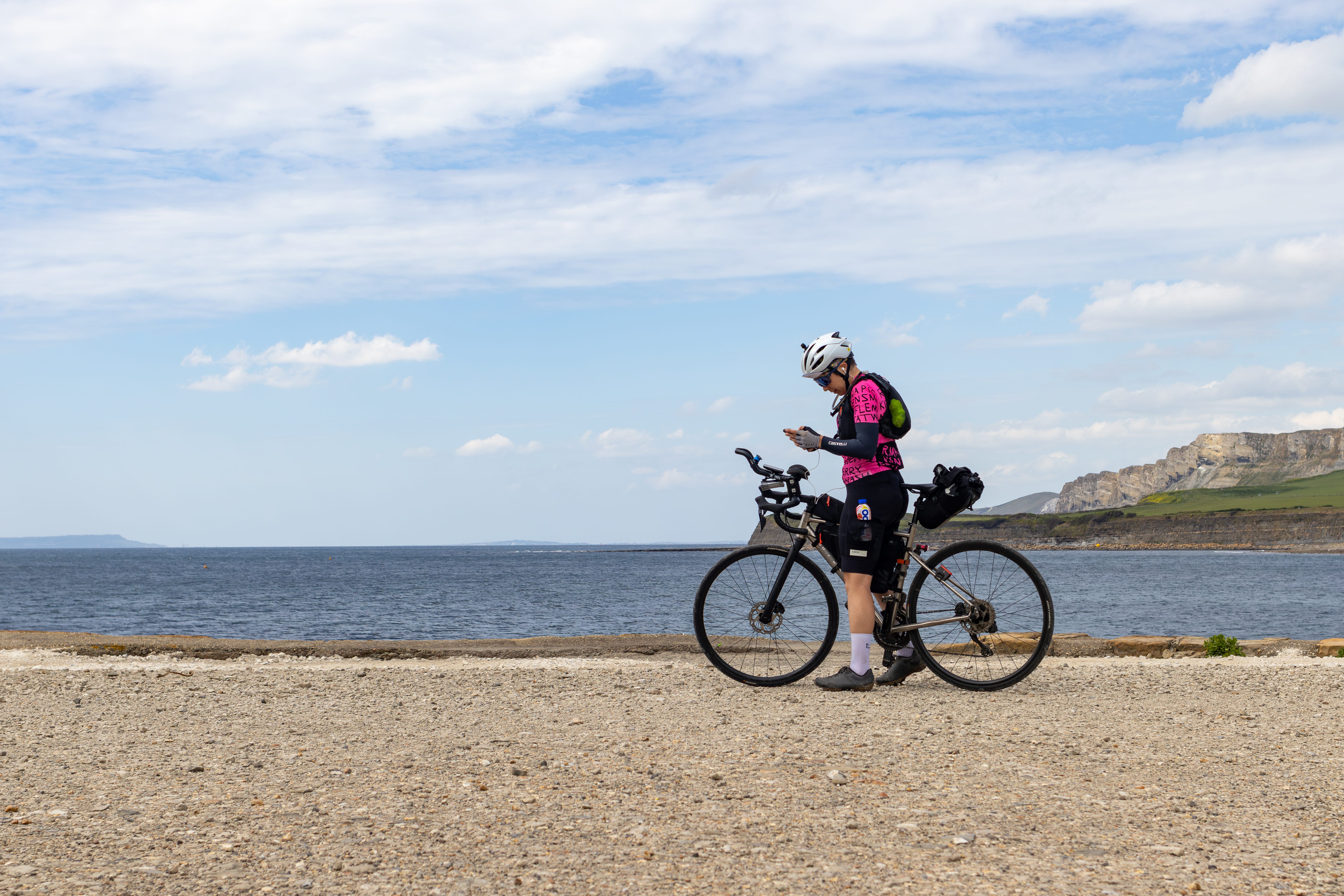
These examples explore some predicaments of the continuum and why this topic is an important one. On one hand, a mobile mechanic offers safety and a chance to reduce race-ending bad luck. On the other hand, there is also an erosion of self-reliance and competitiveness fairness; imagine if you needed assistance but the mechanic were 20km away helping another rider, this gives them an unfair advantage over yourself. Turning a blind eye reframes this as ‘luck of the game’ of being in the right place at the right time. Whether paying a mechanic to fix your bike or fixing it yourself, both of these things are acceptable, however it is the context that matters: a bike shop is stationary and independent from the race, whereas a mobile mechanic is on the move and involved in the events of the race.
So why do the nuances of self-supported even matter? Why can’t we just have fun with our mates and not worry about whether we’ve broken a rule or not!?
As ultra distance cycle races move into the mainstream, we are seeing a professionalisation of the sport, with teams such as Canyon x DT Swiss All-Terrain Racing and the Old Man Mountain Experimental Bike packing Team. With more at stake and no governing body to set the standards it can be confusing for rookies and professionals alike on where the rules start and end, and the point at which one rider has gained an unfair advantage over the other.
Not having a strict definition risks turning races into semi-supported events, creating an unequal playing field disguised as fairness. Stricter enforcement and clearer rules means more accountability. Moving forward this could even be in the form of a written agreement, concise and all encompassing in nature with the ‘three pillars’ at its core. Making it mandatory for participants to read and sign this agreement before the start of a race would be a surefire way to ensure all riders are setting off on an equal playing field.
I suggest that self-supported ultra distance racing isn’t just a format, it’s an identity and fairness mindset that those racing have to choose and abide by. Because of the vast scale of such races over time and distance, it comes down to the integrity of racers to race in the spirit of self-sufficiency and equal opportunity. When those inevitable grey areas arise, consulting the moral compass should be the first point of call with the following question: does this action or scenario give me an unfair advantage over my competitors? If the answer is ‘yes’, then the line has been crossed.
This is an opinion piece showing one perspective only. Ultra distance bike racing is a community endeavour, and I invite all responses or counter opinions in response to this article. Leave a comment with your thoughts below, and together we can aim to make this sport a fairer playing field for all.
Enjoying this post?
Subscribe to get future long-form interviews, race breakdowns, thoughtful pieces, and deep-dives into the data straight to your inbox:
We try to publish most of our work for everyone. If you’d like to help us keep doing that, upgrading to paid is what makes it sustainable – and it unlocks premium posts and the archive:
🚨 Before you go! Help support our work and…
Click below to Like ♡ and Restack ⮂, and help us grow.
Hit the ‘Subscribe’ button if you haven’t already.
Leave a comment 🗨️ with your thoughts, we love reading them all.
Upgrade to a paid subscription to help make this all possible.
I think you've summed this up really well, Nicky. The grey area is also where I think newer riders fall short, as it is sort of an unsaid rule area.
Tbh, almost everyone I hear after events both in public comments or in private, did talk about calling friends and family at some point, whereas I did believe lost dot really wants you alone and on your own. I do not think that calling somebody should be considered a grey zone if you just have a chat and they do not tell you stuff like road works or your route etc. I also think trail angels should be allowed, unless of course you know the person, but if the rules you accepted say nope, then nope it is.